Considering this weekend’s weather, I wanted to share a piece that my son Jonathan wrote two years ago. You can read more of his writing at Answerve. –Josh
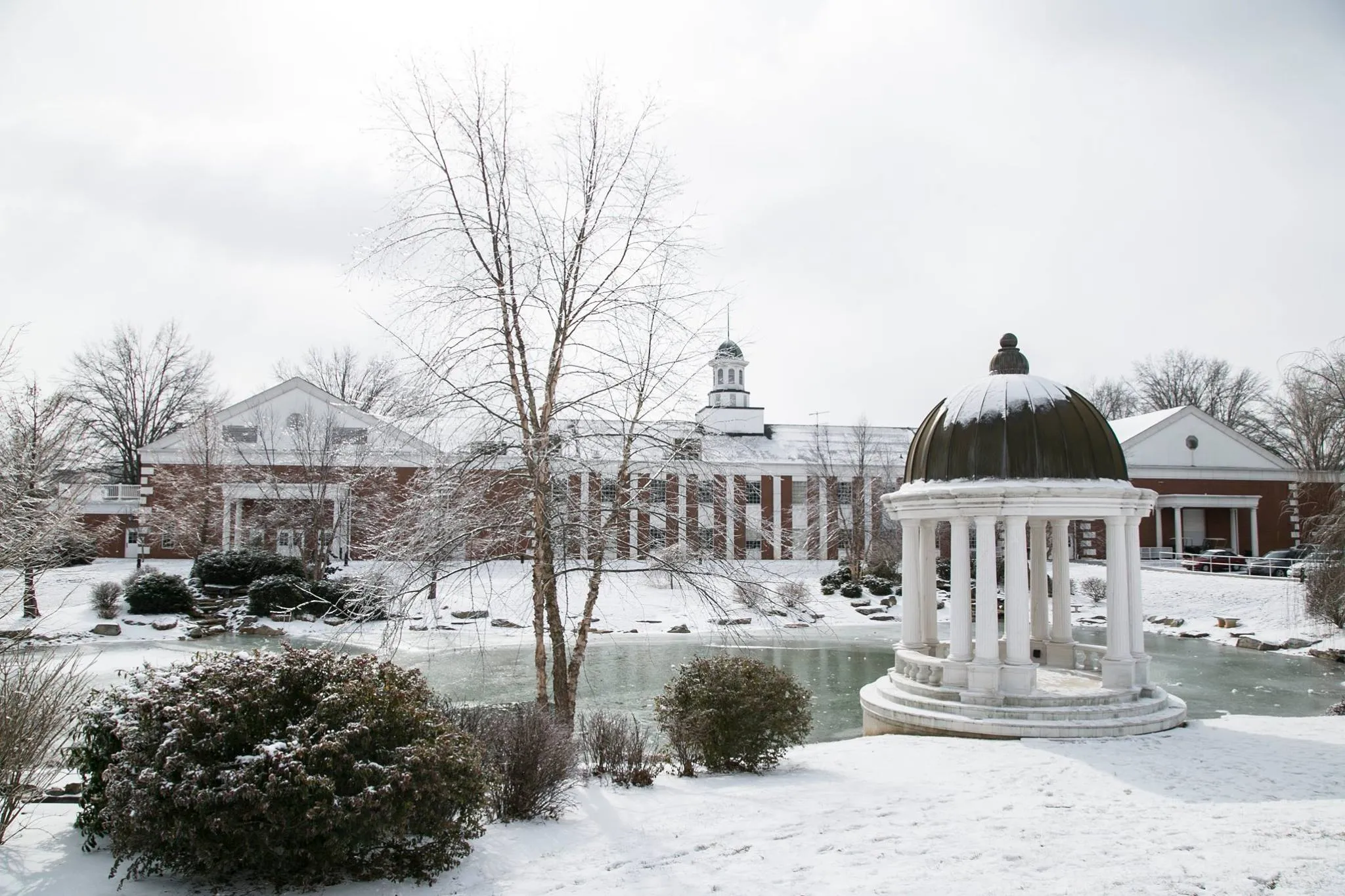
The snowfall left our college incapacitated – our rural Tennessee campus had no defense against its siege. Snow fell ceaselessly the first day, and flurries patrolled for the next few. I had never before seen such a volume. Past snows were always a seasoning, a thin layer, but now we were conquered by it.
Professors came out with their kids, classmates rediscovering the joy of play as those more skeptical just poked around curious. Fascinated by the weather, I stayed out until deep in the night, enduring frozen lips and nostrils raw with stagnant mucus. The hourly bells never rang, and I felt I had escaped the reach of time. The passersby had vanished by evening, my only neighbors the footprints from hours past, and even these were smothered the next day. The world had forgotten itself.
This new, wintry sheet never showed as much wear – only a few felt moved to remap the terrain, and there was a special vulnerability in seeing my peers’ tracks, like hearing a distant echo. Here was the rare evidence of our continuity, all of us vibrating far beyond our usual moments, our hours overlapping. It was impossible to be a solipsist in the snow; in the parking lot, a stray deer was found prancing in the centers of our soles.
I could almost forget the construction that had haunted our campus the past few months. Dug-up sidewalks were filled again, traffic drums made into little igloos, cones peeking out like shark fins. Not only the construction, but all our human impact seemed minimized, even forgiven. The snow was heavy enough to entirely cover the roads and sidewalks, all of it looking as natural earth. This all used to be ocean, and now we again walked on water.
But people were impatient, saboteurs now shoveling the sidewalks, trenches with mounds of snow on either side, and over these altars they’d pour an electric blue ice melt with some mystifying scent. The snow grew sporadic, a skeleton crew of flakes finally tapering off. Knowing I had little time before I’d be yanked back to earth, I resolved to explore the forest on the school’s edge, soaking in every corner of this new canvas.
Giddily, I entered – this was a weightless secret, a secret that carried me. The snow washed my eyes and cleared my schedule – truly, the white invited me into the woods, putting its threats in a stranglehold so I could smuggle myself in and out. The swamp of streams had frozen over, and I could walk unimpaired. The snow had its tricks – forgotten holes grabbing my heels, branches thrusting their freezing dust upon my back – but these could be forgiven. Each I endured with laughter, the cold burrowing in me but overpowered and reconciled by the warmth of my heart.
Here, the familiar was made new, and I fell in love again. I’d visited the woods many times before, but now I saw a complex, interweaving system, verses on a deckled page. Deer tracks guided me through barricades of trees, and the otters could no longer hide their troves. Finally I realized how alive this garden was, and how distinct I was as this biped, to have my limbs split between the land and sky. The slate was overwritten, I the first and only human to walk this ethereal terrain.
Surely, this must have been some prologue to heaven. The clouds themselves fell on us in the impatient storm of compassion. Our transgressions were covered up, our new steps emboldened. I wriggled my slobbered feet from the stiffened boots, beating the leather against the ground to dump out the swallowed sleet. My lungs were cold and heavy, but my spirit was on fire.
The snow didn’t just leave. It cocooned, pressuring a revolution. This fading ghost possessed the earth it sank into, remade into a fertile mud. The beauty plummeted, the snow’s firm grip faltering in unsatisfying plops, crumpling beneath our feet. Where went the constitution of heaven – where now was its material? The last mounds might endure another week or two, rotting and porous with bruises of soil, but the white curtain befalling our city had torn without us realizing, gnawed at by the sun – the goodbyes weren’t always so gradual, but they were always ugly.
We’d been cooped up on a sterile campus for over a week, but with the icy roads at least now manageable, Riley drove us to our church’s youth group with unprecedented eagerness. Neglected for a week, the scaly, dusted roads were hungry and vengeful, growling under our tires. We made it fine, but only a few kids ended up showing, and our built-up energy didn’t last. As the youth were dismissed, we reviewed things with the pastor. He told us a homeless person had frozen to death – someone had just found her lying beside the railroad tracks, half-eaten by the snow. I had known her, briefly.
I’d seen this woman on the street, and she’d gone into the church, shouting for the food she knew she deserved. Our church was a coffeeshop, inconspicuous between the cramped pubs of our rusted street. This former red-light district had been the site of race riots and howling shootouts, but it had since been repaved. Now, it hosted churches – the backroom of the cafe was intended as a rentable event space, but instead served as our sanctuary. The pastors also owned the three-bedroom condo upstairs. Typically empty, it hosted the church youth, nursery, and other small groups on Sundays and Wednesdays – somehow, they managed to avoid paying property tax on the whole enterprise. And yet, this woman didn’t want the Bible, and she didn’t want coffee, either – what did just staying awake do to help her? She wanted an actual plan. She needed a meal. But she was causing a scene in front of the patrons, and wasn’t it the Christian thing to let them all live peaceably? So she was banned and apologized for, the raving prophet sent back to the streets.
An old, wrinkled woman, her convictions only swelled when challenged. She righteously blamed society for her condition – the state and the church and all their hives of hypocrites – and she rasped out elegies for the comrades she’d seen discarded. Her whirlwind mind conflated dozens of leftover conspiracies forged long ago in self-defense, the kernels of truth each preserved with a rueful humor. With what little she had, she stayed generous.
And now she was dead.
One of the kids overheard us, and as she waited for her ride, she tried to quash my sorrow: There’s nothing we could’ve done, the girl said. Apparently, she hadn’t sought out shelter, but I didn’t think she’d sought death, either. “Shelter” wasn’t some autonomous, neutral entity, but a posture of open arms, yet here we washed our hands in the slush that made her grave. People could survey the streets, searching under bridges, offering rides. Any individual, in fact, could have made their apartment into an exclave of shelter, letting her crash with them for at least a weekend, when the fatal conditions could not be ignored. What was more repugnant: A stench and an awkward conversation, or a dead body in your backyard? But I stayed silent, the girl back on her phone.
What happened to our church? Our country? We were the minutemen, a revolutionary democracy fighting with spontaneous conviction, now just some armchair army, no catalyst enough to stir us. We rationalized our tragedies, again and again, shrinking ourselves so much to claim the problems were beyond our reach. The deaths became inevitabilities, and we pat ourselves on the back just for thinking of them, as if we could house them in our minds. We isolate them, and they become already ghosts. We don’t know how to grieve them. Estranged from their families, their derelict friends overlooked, we all carry the grief, embarrassing little deaths dragged along like white squares of toilet paper on our shoes.
Then the pastor told some jokes. About it, about her and her death. He was always so affable, sharing even the report of her death so off-handedly, just as casual as the preceding talk of NFL playoffs. When his team lost, he was roused, but her? He cracked a smile. She sure was crazy, huh?
They were all just anecdotes, the houseless some fixture, some charm of the city. “I talked with her a couple times,” like one would say about going to a bar. Their schizophrenic delusions spice up your life. All the shifting wayfarers become as legion, all just one soul to someone like the pastor, who’d worked in urban neighborhoods for decades. This wasn’t the first time he’d seen a homeless person freeze to death. At least this was conclusive – others just went missing, walking into his church for a decade and then never again, leaving only rumors. He said this as if to impress us, like the vagrants were celebrities you’d cross paths with at the airport, and I wondered if he had to numb himself to it. Maybe the minister quipped to cope, or maybe his eyes were on heaven, death truly without sting. His words horrified me, but I’d have a similar reaction no matter how he delivered the news. Death horrified.
But I just didn’t understand why the pastor wasn’t angry. I needed to see a fire, yet what had I ever done with mine? I’d see her, I’d say “hi,” and that was it. I didn’t think I’d ever given her money; I once told her I wasn’t carrying cash, and I was – just in bills I thought too big for the circumstances. But how many times did I let her blend into the surroundings, indistinct from all the other wanderers in heavy coats? How often was she a blank in my world?
The pastor was finishing up cleaning the store. I leaned over the countertop, steadying myself. A laminate page hung beneath the register. A blurry photo of the woman scowling, zoomed in from some security cam. Her needly grey hair jutted outwards. DO NOT LET THIS WOMAN IN THE STORE. Pastel marker adorned the margins of the page, rainbows and smiley faces, a lime green smirk even censoring her grim expression. This unwanted poster was now her tombstone, doodled flowers at its feet.
It would be taken down by the next week.
It began raining on the drive back, too warm for an encore from the winter. Long strips of snow littered the fields like shriveled corpses, brown and pink and begrimed by the road’s collateral. At a forest bend, a pelt of mud pounced at our car. We jolted at the succeeding hydroplane. “Oops,” gulped Riley, as I went ooh. She chuckled at the synchronicity, and at the difference in our tones. My wonder hesitant, it was the first thing I’d said that ride. I searched for the woman online – no obituaries, but every local station had a story on it, filed under “local news.” Somehow, she was only fifty.
If the snow was heaven, then the heavens abduct. I couldn’t deny the hibernal, dreamlike beauty, but it was a privilege to enjoy it as such. For some, the graveled ground was all they had, and now it had been invaded by the white. I could always retreat when I had my fill. I could see the ice glisten, a warning from the cautious sun, but I knew the cold crept in dark alleys, waiting to strike. The car’s heating purred, even my seat warm, and I brushed the coat left resting on my lap. I thought of her, packed in all her layers just to sleep through the night, enveloped in a futureless chrysalis solely of herself. I wondered, then, if she’d thought change was ever possible.
Riley dropped me off at my dorm. The snow was now an archipelago, tattered patches and spirals like imprints of the clouds above, and here, sandwiched between, we faced a nascent flood. Rain poked at my head, sliding ineffectual down my glasses, but each drop drilled through that degenerating snow, coercing it to join the deluge.